

Are Young Players Getting Hurt From Their Golf Swing?
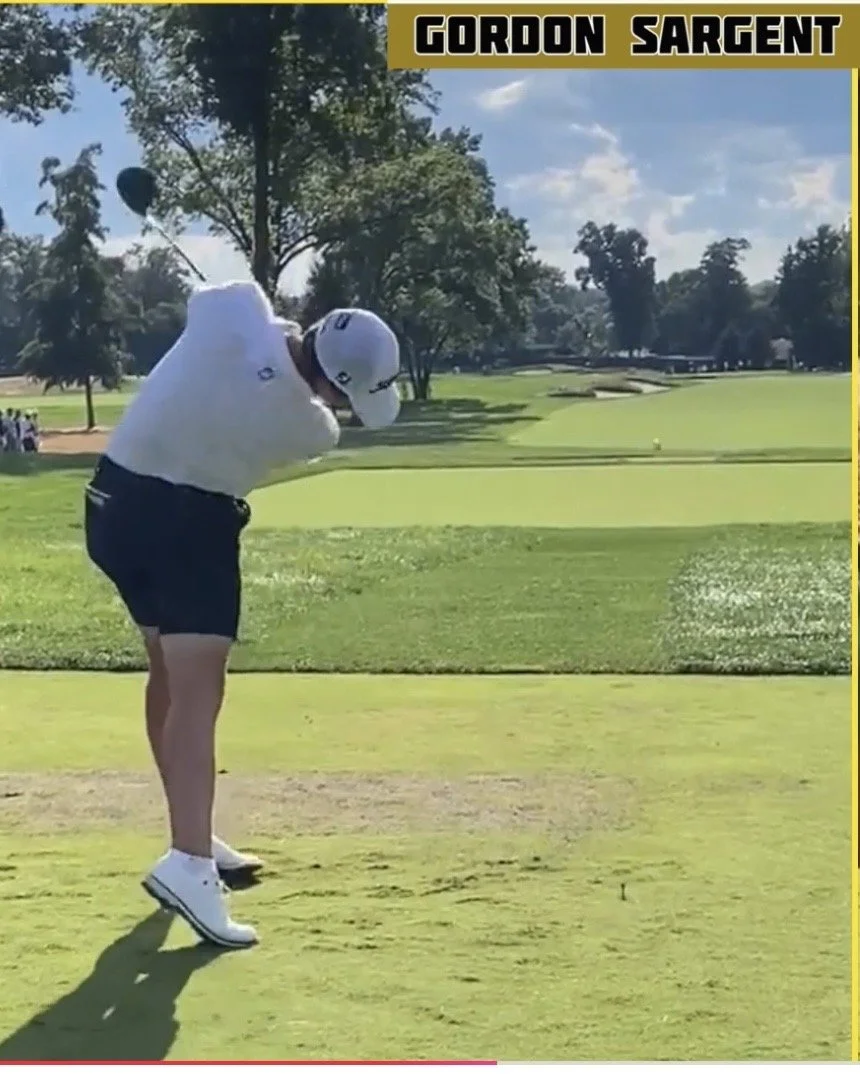
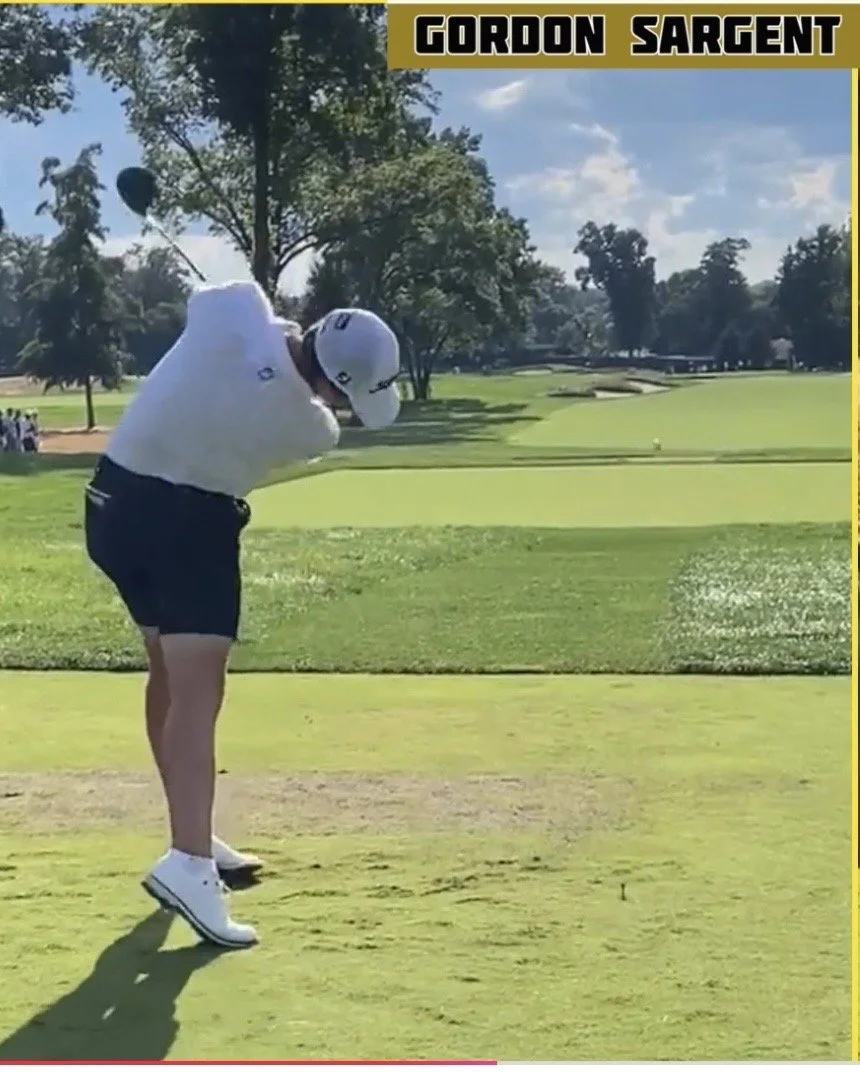
PGA Tour Player and Former NCAA Champion, Gordon Sargent
Back pain has always been a problem for golfers. However in the search for greater distance many young players are compromising the health of their backs. It is estimated that 30% of the Division 1 golfers have back pain often leading to physical therapy or even surgery.
The poster child for this problem is PGA Tour player Will Zalatoris. Since coming out on the PGA Tour in 2021, when he was named rookie of the year, he has won over $20,000,000. However it has come with a significant cost to his health.
His 2023 season was cut short by microdiscectomy surgery on his back and again in May of 2025 with a full disc replacement surgery. He is now on a careful regimen in hopes of getting back on tour.
“Kids at a young age looking for distance and, having some success at the game, are candidates for a problem,” said Jeremiah Hales, of MPower Physical Therapy, a physical therapist who works with high school and college golf teams. “At the top of the backswing they drive their hips forward causing the shoulders to move back into the ‘rock position’. They drive down and thru the ball in this side bend position to the finish, putting a crunch on the low back.”
Videos show a nearly 90 degree angle being set between the lower torso and upper body in many great young players. Former National Amateur Champion Gordon Sargent and recent PGA Tour winner Jackson Koivum, in addition to Zalatoris, are in this position.
“If the player doesn’t change the swing to ‘roll’ out of the ‘rock’ position, such as what Scottie Scheffler does, there is some likelihood serious back problems may occur,” said Hales. “Girls need to change their swing by about age 15 and boys by 17. They pick up the habit as junior players and if they don’t learn a new swing there may be problems. My observation is, it’s hard to make the swing change once they get to college.”
“It takes strength and skill,” said Hales. “If they are not strong enough or do not have enough skill to make the swing change, they will revert back to their old swing and maybe sustain injury. They love the speed they are getting and have a hard time making the new swing work in the same way. They need to build abdominal strength.”
“There needs to be more biometric testing done of the athletes,” said Dr. Luke Benoit, who holds a doctorate in kinesiology and is Director of Instruction at Interlachen Country Club. Testing by the Titleist Performance Institute TPI or an accredited TPI instructor can tell whether an athlete is at the maximum level of stress on their body during the swing. For instance, two players can be in the same rock position leading to a back stressing position at the finish. However if one of them is not stretched in the rock position through the strike to the finish, to the maximum their body can move, they would probably have a lesser chance of being injured.”
“There have never been studies done,” said Dr Benoit. ‘It’s all anecdotal evidence. If a young player has a side bend into the rock along with forward rotation, plus a bend down during the swing, it can cause problems. The three way bend called the ‘crunch’ puts stress on the back.”
“About 40% of the Korn Ferry Tour players are now using a swing like Scottie Scheffler, or a ‘jump’ swing,” said Benoit. “The pressure on the lower back releases with the jump. From the rock position as the swing rolls down and through the strike, the legs straighten thus releasing the pressure on the lower back.”
“It stands to reason that if ten people put their back through the stress that Will Zalatoris and Gordon Sargent have, while ten others use the jump swing, like Scottie Scheffler, more players with the crunch swing will have back problems,” said Benoit. “It’s hard to predict who will have back pain but the jump swing puts less pressure on the lower back.”
“I always have someone in physical therapy with a broken vertebrae from pressure caused by the golf swing,” said Hales.
“Not everybody putting their back in the crunch position is going to be injured,” said Benoit. “Everybody’s body is different. Something that might cause me to be injured, may not bother you.”
“I started seeing this problem several years ago,” said Benoit. “A better way is to move the ball forward at address, then as the pelvis releases, the left foot leaves the ground. The head may even move forward. ”
Decades ago golf professionals talked about the finish position looking like a “reverse C.” Golf professionals had bad backs that may have been caused by the reverse C. Not to the extent that college players are having today, however.
“The responsible thing to do is for the coaches to teach their students to back off,” said Benoit. “Their body can do it at age 13, but a good coach should say ‘no’. It’s hard to predict who will have back pain, but the Zalitoris swing is high risk.
I’ve seen a lot of golf swings but have never seen one that appeared to be a back injury waiting to happen like the crunch swing in a life in golf.
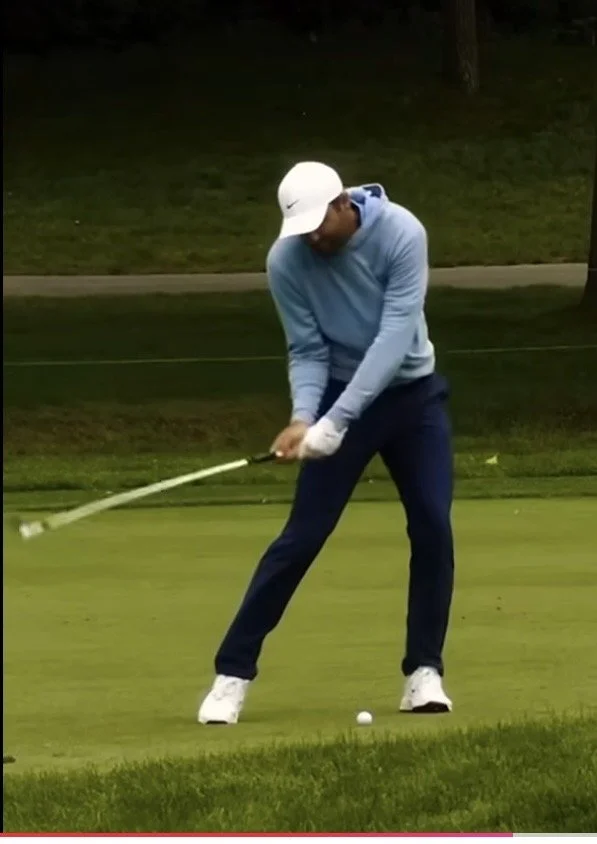
Scottie Scheffler. Note the lack of stress on his back.